
Our first full day in the US was marked by a visit to the Statue of Liberty. The sheer grandeur of the statue, which I had only seen from a distance before, was an impressive sight from Liberty Island itself. The island was bustling with visitors from all corners of the globe, a living testament to the statue’s universal appeal.
The Statue of Liberty, a gift from France to the United States, stands as a powerful symbol of the enduring friendship between the two nations. It was a tribute to the centennial of the American Declaration of Independence. Funds for the statue itself were raised from diverse groups in France, including the cheese-makers of Normandy!
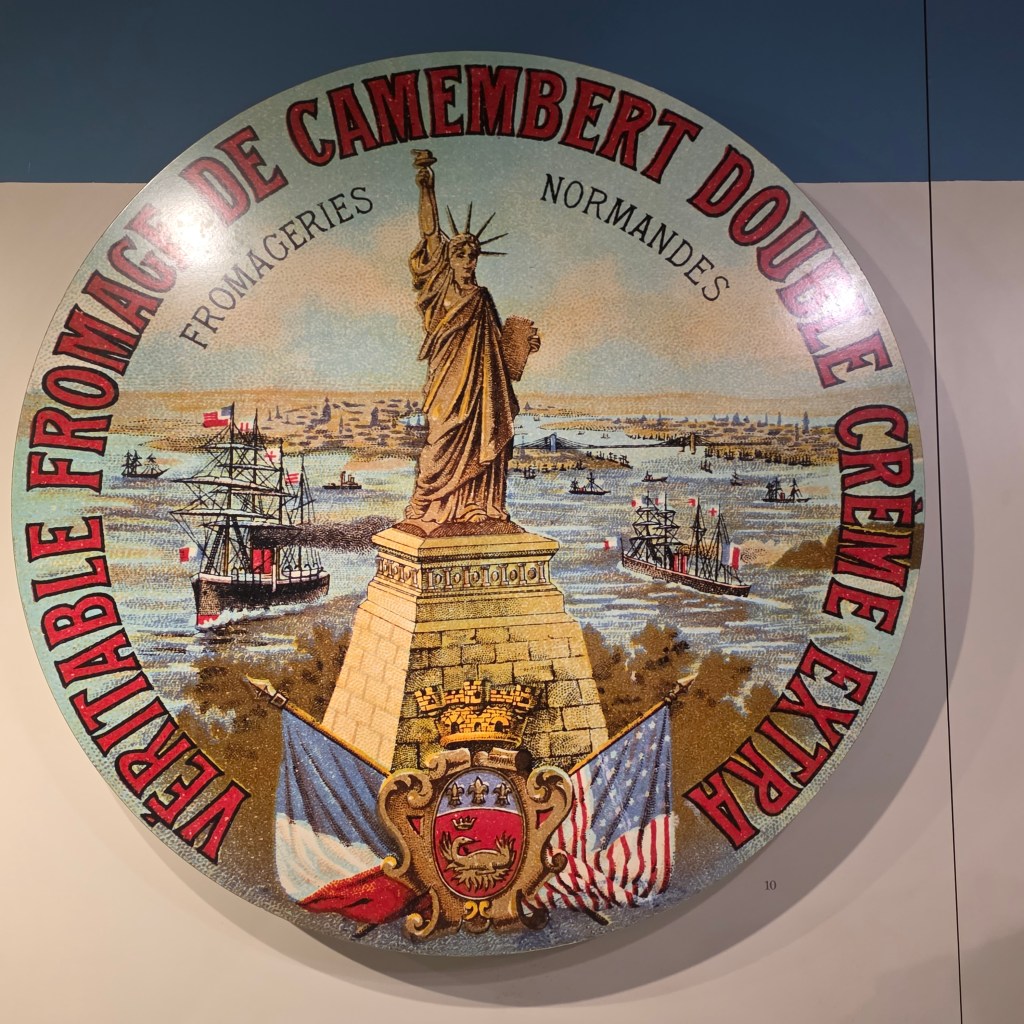
The statue was designed by French sculptor Frédéric Auguste Bartholdi and was a joint effort with the engineer Gustave Eiffel–how to keep a statue this large upright and to present it from collapsing was a major feat of engineering. It was intended to reflect the Roman Goddess Libertas, the goddess of liberty, and also drew inspiration from the designs of other classical statues, such as the Colossus of Rhodes. It was initially constructed in France and then disassembled into 350 individual pieces. These pieces were carefully packed into 214 crates and shipped to the U.S., where it was reassembled on Liberty Island, a process which took several years.
The collaboration between the USA and France in building the statue was tom provide a testament to the two nations’ shared values of liberty and freedom. France was to provide the statue, and the United States the plinth. However, when the fundraising for the plinth was slow, Emma Lazarus, a Jewish-American poet, stepped in. Her poignant sonnet, ‘The New Colossus’, written in 1883, breathed new life into the fundraising efforts. The immortal words, ‘Give me your tired, your poor, your huddled masses yearning to breathe free…’ were engraved on a bronze plaque and placed on the pedestal in 1903, 17 years after the statue’s dedication.
By this time, the statue had become linked to America’s role as a beacon of liberty to the millions of immigrants who flooded through New York. This became central when Ellis Island was opened in 1900. Almost 90% of immigrants to the United States came through New York, and their first sight of the United States was the statue looming over New York Harbor and Ellis Island itself. Although this had not been the intention of the statue, it became a symbol of American freedom for these immigrants.
Today, the statue is an immediately recognisable symbol of the United States around the world.
 Early American Musings
Leave a comment